Monday, August 26, 2013

Illinois Department of Employment Security Translates Klingon


What began as a promotion for the upcoming Star Trek movie, Star Trek Into Darkness, has now persisted on the website of the Illinois Department of Employment Security (IDES) following positive feedback.

Clicking here will allow you to visit the site and if you click in the upper right corner of the page you can translate any part of the website into the beautiful galactic language. Greg Rivera, spokesman for the IDES, said the inclusion of Klingon has increased the traffic flow to the web page.

Microsoft Translator automatically translates the English text into Klingon while all of the other (more practical) language translations are monitored by staff members.  It seems the IDES is having difficulty finding a master of the Klingon language.

To read the original piece via Uproxx, click here.

In the meantime: nItebHa' mamI' DaneH (would you like to dance with me)?

http://www.smegapple.com/othervideo/page2/depressed%20klingon.jpg

Wednesday, August 14, 2013

10 (More) Languages You Have Probably Never Heard Of

1.  Ewe - A Niger-Congo language spoken by approximately 3.6 million people in southeastern Ghana and southern Togo.

2.  Fula - Also a member of the Niger-Congo language family, Fula, also known as Fulani, is a language of West Africa.  It is spoken by 24 million people in 20 different countries.

3. Gaddang - Only spoken by 30,000 people (according to a 1984 census) in the Philippines.  In the 2000 census, Gaddang was not \an identity option for residents of Nueva Vizcaya.

4.  Gorani - Spoken by the Kurdish people of southern Iran and Iraq by an estimated 200,000-300,000 people.

5.  Hausa - Spoken by 34 million people in Benin, Cameroon, Côte d'Ivoire, Ghana, Niger, Nigeria, Sudan and Togo.

6.  Hmong - 2.6 million people claim this language as their native tongue.  It is spoken in China, Laos, Thailand and Vietnam.

7.  Ibanag (or Ybanag/Ibanak) - Another language from the Philippines makes the list.  This one is spoken by 500,000 people (1990 census) in the northeastern provinces.

8.  Javanese - Spoken by the people of Java (Indonesia), Suriname and New Caledonia by 82 million people.  More than 30% of Indonesians speak this language.

9.  Karen - The Karen languages are spoken by 3 million people in Burma and along the border of Thailand.

10.  Kashmiri - India and Pakistan lay claim to this language and 5.6 million people are native speakers.  Kashmiri is one of 22 languages in India.

We cover all of these languages and more!


Monday, August 5, 2013

10 Languages You Have Probably Never Heard Of

1.  Acholi - Spoken by the Acholi people in the areas of Gulu, Kitgum and Pader in northern Uganda.  It is also spoken in South Sudan 

2.  Bajuni - The Bajuni people live in the Bajuni Islands in the Indian Ocean.  Smaller pockets of Bajuni speakers can be found in Kenya and Somalia.

3.  Bambara - Spoken by six million people primarily in Mali but also in Burkina Faso and Senegal.

4.  Basque - Nearly 800,000 people living in northeastern Spain and southwestern France speak this language.  There are five distinct dialects of Basque: Bizkaian, Gipuzkoan, Upper Navarrese, Navarrese-Lapurdian and Zuberoan.

5.  Bravanese - Bravanese is also called Chimbalazi or Chimwiini.  It is a variety of Swahili of the Bravanese people in Somalia.

6.  Chamorro - This language is spoken by almost 100,000 people in Guam and the Northern Mariana Islands.  

7.  Chavacano - Chavacano is spoken in the Philippines by anywhere from 360,000 to 1.2 million people based on census data.  Six dialects have stemmed from the original language.

8.  Chuukese - According to the 2000 census, 48,200 people in the Caroline Islands of Micronesia speak this language.  There are also scattered speakers on the islands of Guam and Pohnpei.

9.  Dakota (Dakhota) - The Sioux tribes of North and South Dakota, northern Nebraska and southern Minnesota speak this language which is closely related to the Lakota language.  As of 1990, there were 15,000 native speakers of the language.

10.  Dinka - The major ethnic group in South Sudan speak this language.  Of the five dialects, Rek is the standard and prestige dialect.  Two to three million people claim this as their native language.

This list is to be continued!  This list was compiled from World Services' extensive language database.  World Services provides language and interpretation services all over the United States.


Friday, August 2, 2013

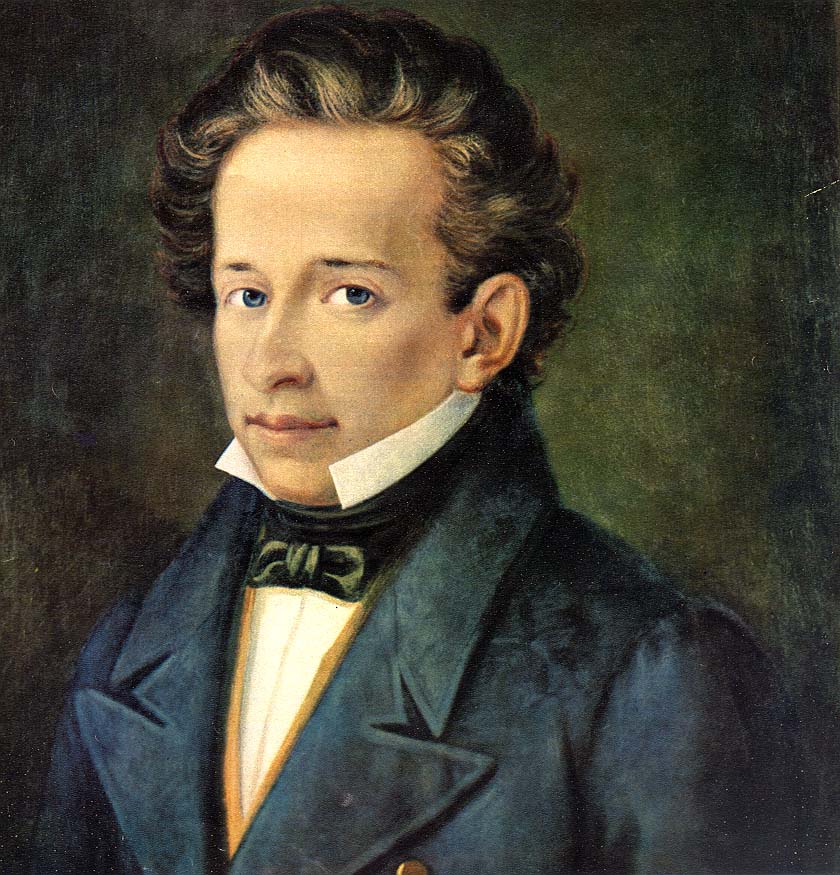
Italian Philosopher's Work Finally Translated

19th century poet Giacomo Leopardi, considered by Italians to be one of their greatest thinkers, may finally get the respect he deserves thanks to a translation of the Zibaldone de Pensieri into English.  Leopardi was born in 1798 and is considered Italy's second greatest poet, trailing only Dante.

The Zibaldone is a collection of of Leopardi's ideas and observations spanning 15 years.  It was published at the beginning of the 20th century, which was over 60 years after Leopardi's death.  He died in 1837 at the young age of 38.

A team of translators from three different countries were able to translate the piece after seven years.  The translation was published in Great Britain on Thursday and is available at Birmingham University.  The translated text spans more than 2,500 pages.

Franco D'Intino, professor of modern Italian literature at La Sapienza University in Rome and one of the many editors of the Zibaldone, said that the text was so hard to translate because it is full of quotations in "Greek Latin, French, Spanish and English."
To read the original article , visit the Guardian.

http://upload.wikimedia.org/wikipedia/commons/c/c6/Leopardi%2C_Giacomo_%281798-1837%29_-_ritr._A_Ferrazzi%2C_Recanati%2C_casa_Leopardi.jpg

Wednesday, July 31, 2013

The Battle For Language Supremacy In New Brunswick

The government's hiring policy in the Canadian province of New Brunswick has sparked two online petitions. 

The first, started by Joyce Wright, aims to halt the passing over of applicants who are only able to speak English.  The counter-petition, started by "three francophone New Brunswickers," wants to maintain the hiring policy of a 50 percent bilingual workforce in the government.

Wright started the petition because she claims, "It's affecting my friends and family members in a way it never has before."  At noon of July 31, 2013, her petition has 5,113 signatures since its creation a month ago.  Her petition can be accessed here.

The other petition's purpose is to protect the provinces' bilingualism which is viewed as part of the area's wealth.  This petition has gathered 1,100 signatures to date. 

As of March 31, 2012, 40 percent of government employees were bilingual, 50 percent could only speak English and 5 percent could only speak French according to The Department of Human Resources. 

A census from 2011 showed that English was the primary language for 65.4 percent of New Brunswickers compared to 32.3 percent who claimed French as their primary language.

New Brunswick is the only province in the Canadian federation that is constitutionally bilingual.  To read the original article, please visit here.

Friday, July 26, 2013

Poor Translation of Miranda Rights Leads to Aquital

Jeronimo Botello-Rosales was convicted of conspiracy to manufacture marijuana and possession of a firearm by an illegal immigrant before his case was handled by the 9th U.S. Circuit Court of Appeals.

Botello-Rosales told detectives under the disputed Miranda rights translation that he had been transporting supplies for the marijuana growers in California and expected to make $20,000.  The Miranda warning was read by the Yamhill County Sheriff's Detective Brandon Bowdle.

Bowdle read the Miranda rights to Botello-Rosales in English as he arrested him.  The rights were then translated by McMinnville Police Detective Jose Salas.  Salas is a native Spanish speaker.

Botello-Rosales' lawyers argued that Salas' translation of the Miranda rights were inaccurate.  The center of their claim revolved around the use of the word "libre," which in Spanish, can be interpreted to mean either free in the sense of 'no cost' or simply available.

The defendant originally pleaded guilty after the motion of a poor translation was denied by  Senior Judge James Redden.  He was sentenced to 10 years in prison on the condition that he could appeal the Judge's finding.

In February 2012, Judge Anna Brown, who had taken over Judge Redden's position after his retirement, determined that Salas' Miranda warning was inadequate but Botello-Rosales should have been able to understand the interpretation of the warning from context.

The appellate panel disagreed and threw out the conviction.  A follow-up case will occur back in the U.S. District Court in Portland for another trial.

For more information, visit the original article.

Wednesday, July 24, 2013

$250,000 Grant Awarded For 16 Literature Translations


The National Endowment of the Arts has approved a $250,000 grant for 16 separate translators who will transcribe works of their language of expertise into English.  The NEA received and reviewed 82 eligible applications for 2014.

Every application was reviewed by a panel of experts and a working literary translator.  The literary translator provided information to the panel regarding "how well the original text was rendered into English, how well it reads in English, how important the original author and work are in his or her own country, and how well-represented the author is in the United States."

The NEA's reasoning for the grant is, "For the art of literary translation is not simply the act of converting an author's words from one language into another; rather, it requires difficult choices and creative thinking in order to fully convey images and meaning."

The 16 translations will span 13 languages from 15 countries. The NEA has awarded 355 translation fellowships for works in 62 languages from 78 countries since 1981.  The languages of Bulgarian, Haitian Creole and Macedonian are experiencing first-time translations via the grant.


To read the original article and view each individual grant, please visit here.