Monday, August 26, 2013

Illinois Department of Employment Security Translates Klingon


What began as a promotion for the upcoming Star Trek movie, Star Trek Into Darkness, has now persisted on the website of the Illinois Department of Employment Security (IDES) following positive feedback.

Clicking here will allow you to visit the site and if you click in the upper right corner of the page you can translate any part of the website into the beautiful galactic language. Greg Rivera, spokesman for the IDES, said the inclusion of Klingon has increased the traffic flow to the web page.

Microsoft Translator automatically translates the English text into Klingon while all of the other (more practical) language translations are monitored by staff members.  It seems the IDES is having difficulty finding a master of the Klingon language.

To read the original piece via Uproxx, click here.

In the meantime: nItebHa' mamI' DaneH (would you like to dance with me)?

http://www.smegapple.com/othervideo/page2/depressed%20klingon.jpg

Wednesday, August 14, 2013

10 (More) Languages You Have Probably Never Heard Of

1.  Ewe - A Niger-Congo language spoken by approximately 3.6 million people in southeastern Ghana and southern Togo.

2.  Fula - Also a member of the Niger-Congo language family, Fula, also known as Fulani, is a language of West Africa.  It is spoken by 24 million people in 20 different countries.

3. Gaddang - Only spoken by 30,000 people (according to a 1984 census) in the Philippines.  In the 2000 census, Gaddang was not \an identity option for residents of Nueva Vizcaya.

4.  Gorani - Spoken by the Kurdish people of southern Iran and Iraq by an estimated 200,000-300,000 people.

5.  Hausa - Spoken by 34 million people in Benin, Cameroon, Côte d'Ivoire, Ghana, Niger, Nigeria, Sudan and Togo.

6.  Hmong - 2.6 million people claim this language as their native tongue.  It is spoken in China, Laos, Thailand and Vietnam.

7.  Ibanag (or Ybanag/Ibanak) - Another language from the Philippines makes the list.  This one is spoken by 500,000 people (1990 census) in the northeastern provinces.

8.  Javanese - Spoken by the people of Java (Indonesia), Suriname and New Caledonia by 82 million people.  More than 30% of Indonesians speak this language.

9.  Karen - The Karen languages are spoken by 3 million people in Burma and along the border of Thailand.

10.  Kashmiri - India and Pakistan lay claim to this language and 5.6 million people are native speakers.  Kashmiri is one of 22 languages in India.

We cover all of these languages and more!


Monday, August 5, 2013

10 Languages You Have Probably Never Heard Of

1.  Acholi - Spoken by the Acholi people in the areas of Gulu, Kitgum and Pader in northern Uganda.  It is also spoken in South Sudan 

2.  Bajuni - The Bajuni people live in the Bajuni Islands in the Indian Ocean.  Smaller pockets of Bajuni speakers can be found in Kenya and Somalia.

3.  Bambara - Spoken by six million people primarily in Mali but also in Burkina Faso and Senegal.

4.  Basque - Nearly 800,000 people living in northeastern Spain and southwestern France speak this language.  There are five distinct dialects of Basque: Bizkaian, Gipuzkoan, Upper Navarrese, Navarrese-Lapurdian and Zuberoan.

5.  Bravanese - Bravanese is also called Chimbalazi or Chimwiini.  It is a variety of Swahili of the Bravanese people in Somalia.

6.  Chamorro - This language is spoken by almost 100,000 people in Guam and the Northern Mariana Islands.  

7.  Chavacano - Chavacano is spoken in the Philippines by anywhere from 360,000 to 1.2 million people based on census data.  Six dialects have stemmed from the original language.

8.  Chuukese - According to the 2000 census, 48,200 people in the Caroline Islands of Micronesia speak this language.  There are also scattered speakers on the islands of Guam and Pohnpei.

9.  Dakota (Dakhota) - The Sioux tribes of North and South Dakota, northern Nebraska and southern Minnesota speak this language which is closely related to the Lakota language.  As of 1990, there were 15,000 native speakers of the language.

10.  Dinka - The major ethnic group in South Sudan speak this language.  Of the five dialects, Rek is the standard and prestige dialect.  Two to three million people claim this as their native language.

This list is to be continued!  This list was compiled from World Services' extensive language database.  World Services provides language and interpretation services all over the United States.


Friday, August 2, 2013

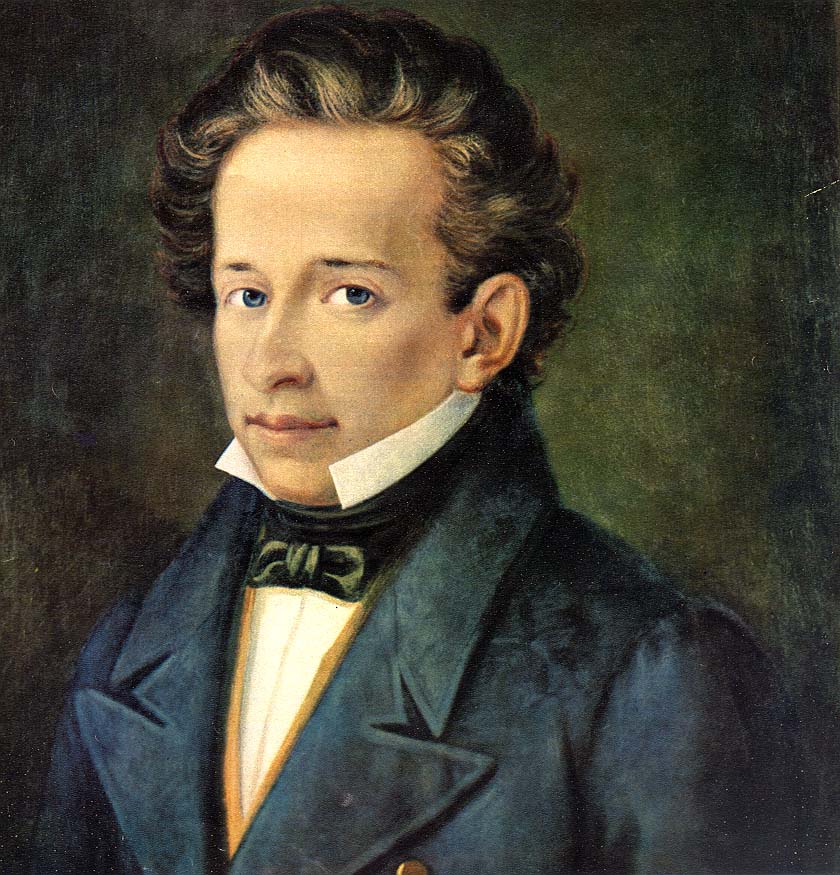
Italian Philosopher's Work Finally Translated

19th century poet Giacomo Leopardi, considered by Italians to be one of their greatest thinkers, may finally get the respect he deserves thanks to a translation of the Zibaldone de Pensieri into English.  Leopardi was born in 1798 and is considered Italy's second greatest poet, trailing only Dante.

The Zibaldone is a collection of of Leopardi's ideas and observations spanning 15 years.  It was published at the beginning of the 20th century, which was over 60 years after Leopardi's death.  He died in 1837 at the young age of 38.

A team of translators from three different countries were able to translate the piece after seven years.  The translation was published in Great Britain on Thursday and is available at Birmingham University.  The translated text spans more than 2,500 pages.

Franco D'Intino, professor of modern Italian literature at La Sapienza University in Rome and one of the many editors of the Zibaldone, said that the text was so hard to translate because it is full of quotations in "Greek Latin, French, Spanish and English."
To read the original article , visit the Guardian.

http://upload.wikimedia.org/wikipedia/commons/c/c6/Leopardi%2C_Giacomo_%281798-1837%29_-_ritr._A_Ferrazzi%2C_Recanati%2C_casa_Leopardi.jpg

Wednesday, July 31, 2013

The Battle For Language Supremacy In New Brunswick

The government's hiring policy in the Canadian province of New Brunswick has sparked two online petitions. 

The first, started by Joyce Wright, aims to halt the passing over of applicants who are only able to speak English.  The counter-petition, started by "three francophone New Brunswickers," wants to maintain the hiring policy of a 50 percent bilingual workforce in the government.

Wright started the petition because she claims, "It's affecting my friends and family members in a way it never has before."  At noon of July 31, 2013, her petition has 5,113 signatures since its creation a month ago.  Her petition can be accessed here.

The other petition's purpose is to protect the provinces' bilingualism which is viewed as part of the area's wealth.  This petition has gathered 1,100 signatures to date. 

As of March 31, 2012, 40 percent of government employees were bilingual, 50 percent could only speak English and 5 percent could only speak French according to The Department of Human Resources. 

A census from 2011 showed that English was the primary language for 65.4 percent of New Brunswickers compared to 32.3 percent who claimed French as their primary language.

New Brunswick is the only province in the Canadian federation that is constitutionally bilingual.  To read the original article, please visit here.

Friday, July 26, 2013

Poor Translation of Miranda Rights Leads to Aquital

Jeronimo Botello-Rosales was convicted of conspiracy to manufacture marijuana and possession of a firearm by an illegal immigrant before his case was handled by the 9th U.S. Circuit Court of Appeals.

Botello-Rosales told detectives under the disputed Miranda rights translation that he had been transporting supplies for the marijuana growers in California and expected to make $20,000.  The Miranda warning was read by the Yamhill County Sheriff's Detective Brandon Bowdle.

Bowdle read the Miranda rights to Botello-Rosales in English as he arrested him.  The rights were then translated by McMinnville Police Detective Jose Salas.  Salas is a native Spanish speaker.

Botello-Rosales' lawyers argued that Salas' translation of the Miranda rights were inaccurate.  The center of their claim revolved around the use of the word "libre," which in Spanish, can be interpreted to mean either free in the sense of 'no cost' or simply available.

The defendant originally pleaded guilty after the motion of a poor translation was denied by  Senior Judge James Redden.  He was sentenced to 10 years in prison on the condition that he could appeal the Judge's finding.

In February 2012, Judge Anna Brown, who had taken over Judge Redden's position after his retirement, determined that Salas' Miranda warning was inadequate but Botello-Rosales should have been able to understand the interpretation of the warning from context.

The appellate panel disagreed and threw out the conviction.  A follow-up case will occur back in the U.S. District Court in Portland for another trial.

For more information, visit the original article.

Wednesday, July 24, 2013

$250,000 Grant Awarded For 16 Literature Translations


The National Endowment of the Arts has approved a $250,000 grant for 16 separate translators who will transcribe works of their language of expertise into English.  The NEA received and reviewed 82 eligible applications for 2014.

Every application was reviewed by a panel of experts and a working literary translator.  The literary translator provided information to the panel regarding "how well the original text was rendered into English, how well it reads in English, how important the original author and work are in his or her own country, and how well-represented the author is in the United States."

The NEA's reasoning for the grant is, "For the art of literary translation is not simply the act of converting an author's words from one language into another; rather, it requires difficult choices and creative thinking in order to fully convey images and meaning."

The 16 translations will span 13 languages from 15 countries. The NEA has awarded 355 translation fellowships for works in 62 languages from 78 countries since 1981.  The languages of Bulgarian, Haitian Creole and Macedonian are experiencing first-time translations via the grant.


To read the original article and view each individual grant, please visit here.

Monday, July 22, 2013

Patients Protest At UCSD Medical Center

A protest was recently held outside of the UCSD Medical Center because of alleged poor translation/interpretation services.  The rally took place because more and more patients are coming forward with their own unique stories about receiving poor language services or none at all.

Mohamed Mohamed, a senior at San Diego High School, missed school days and his high school's exit exam because he was required to translate for his father's medical appointments.  The hospital's major language category gaffs seem to center in either Swahili or Somali.

The protest is just a part of the statewide effort to improve interpretation/translation in medical settings.  The American Federation of State, County and Municipal Employees (AFSCME), Interpreting for California and nonprofit Mid-City CAN’s Access to Healthcare group have "been collecting stories from East African, Burmese, Latino and Chinese patients who say poor communication with doctors has but them at risk."

The UCSD Medical Center is being accused by the coalition of protesters of using interpreters under the age of 18 which is illegal.

Aaron Byzak, spokesman of UC San Diego, said, "The hospital has five Spanish-language interpreters, a 24-hour phone service that offers interpretation in 200 languages and a teleconferencing program in 150 languages."

This is certainly an issue that must be addressed because one in five patients will be non-native English speakers once the Affordable Care Act is initiated.  And of course, all of this could have been avoided with the use of a reputable translation/interpretation company such as World Services.

It is crucially important that interpreters are certified to handle medical terms because if they are not, information relayed from the medical professional to the patient may be misleading.  This opens the door to all kinds of liability issues.

To read the original story about the protest, visit here.

Friday, July 12, 2013

Jerusalem Creates New Translation Project

The Health Ministry in Jerusalem, Israel has coordinated a new service that aims to connect doctors, nurses, social workers and patients who speak Arabic, Russian or Amharic.

The new service will be open 24 hours a day besides Shabbat and holidays.  During the trial period of the project, it will only be available in the following locations: Wolfson Medical Center in Holon, Western Galilee Hospital in Nahariya and the Barzilai Medical Center in Ashkelon.

The project will aim to contact native speakers of the language needed via hospital intermediaries.  They will then relay the information from the care provider to the patient as necessary.  If the project is deemed a success, the services will expand to other locations.

The translators/native speakers have completed a medical translation course and have been provided with basic medical dictionaries.  This issue came to the light following a survey conducted in 2011 by the Central Bureau of Statistics which claimed 17 percent of people who cannot speak Hebrew have experienced difficulties in receiving medical care.  This percentage increased to 23 percent among persons 65 years of age or older.

For the original article, visit the Jerusalem Post.

Thursday, July 11, 2013

Ancient Markings Found In Eastern China

Markings on a stone slab found at an excavation site in eastern China date back 5,000 years, per archaeologists.  Chinese scholars are deciding on whether the markings are actual writing or simply a precursor to words expressed through symbols.

The potential Chinese writing is 1,400 years older than the oldest Chinese writing that has previously been discovered.  That writing was found on animal bones during the Shang dynasty. 

Xu Xinmin, the lead archaeologist, claims there is evidence of symbols on two separate broken pieces of an axe.  One of the pieces boasts a segments which contains six symbols written in succession that could be interpreted to indicate a simple sentence.

The individual pieces have all been excavated between 2003 and 2006 from the Liangzhu relic site south of Shanghai.  Up to this point, Chinese scholars have decided to simply call the discovery "primitive writing" until experts from outside of the country are able to investigate the markings.

Primitive writing: Markings on a piece of a stone ax.

The original article from MSN News.

Tuesday, July 2, 2013

Interpretation Lawsuit In New York

5 Hispanic women have filed a federal lawsuit against the NYPD after reporting cases of abuse only to be refused proper translation services. 

The women, led by Wendy Garcia, are seeking an undisclosed amount of money based on charges "that the police refused access to an interpreter to people with limited English, contrary to city policies that say officers must offer linguistic assistance to those who need it. The suit also argues that the police 'degrades, ridicules and otherwise mistreats limited-English-proficient individuals who request interpreter services, actively demeaning them for their lack of English proficiency.'"

In Garcia's case, she called 911 after being shoved and having a door slammed on her by her boyfriend.  The police arrived but did not provide a Spanish interpreter for Garcia to tell her side of the story.  Her boyfriend, who was able to speak English, informed the police what was going on from his point of view which resulted in a near arrest of Garcia.

The NYPD responded to the lawsuit by identifying their "thousands of Spanish-speaking police officers" and a "volunteer  translator program [who] assist the public and police in investigations and for other needs."  Paul Brown, the chief spokesman for the NYPD also stated that the department has more than 1,400 volunteers that speak a total of 64 languages.

The five women also accuse the NYPD of mocking them and in certain cases, only speaking to the man's version of events because he could speak English. 

2 of the women, Arlet Macareno and Yanahit Padilla, were arrested after they called the police although Macareno claims her husband pushed her down a flight of stairs and Padilla claims her boyfriend beat her.

The plaintiffs in the case are supported by Legal Services NYC and The Violence Intervention Program.  According to the lawsuit, almost 25 percent of New York City residents over the age of five have limited English proficiency.

To read the article in its entirety, click here.


Thursday, June 27, 2013

Translation In The Palm Of Your Hand

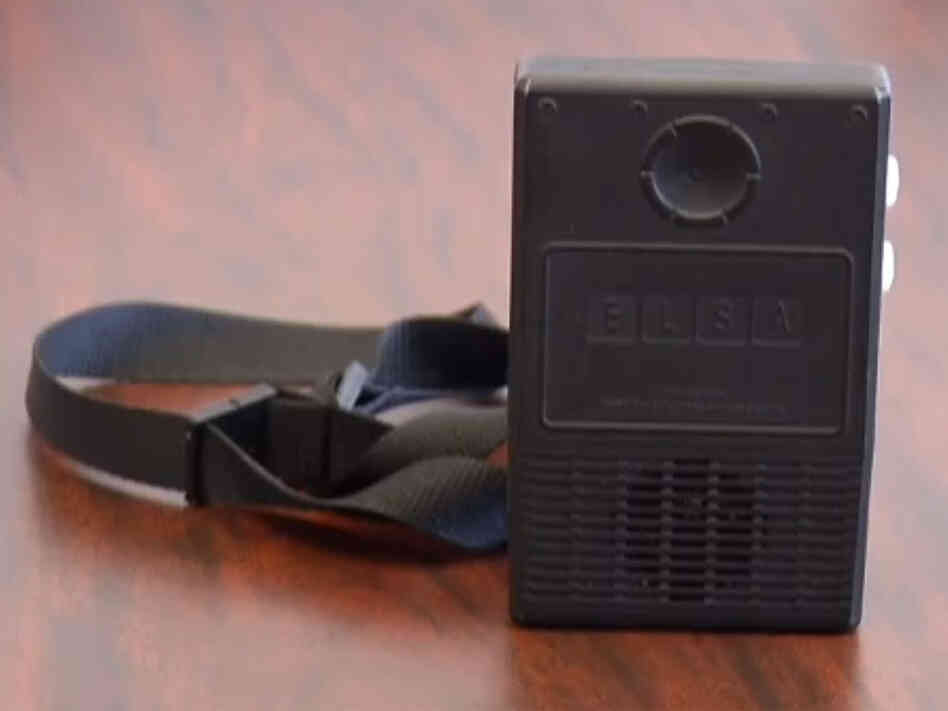
A new device named an Enabling Language Service Anywhere (ELSA) gives users access to 180 different languages in just one minutes time.  The device was created by Charles Howerton after he struggled to communicate in Spanish with workers at his construction company.

The device is simple to use too with only three buttons and built-in microphones and speakers. 

Thus far, Howerton has noticed the largest use of his invention has been from "first responders - medical, police, fire - they're the one's that communicate the most."  The device has been used in a number of intense situations such as domestic violence instances and the delivering of a baby.

The ELSA currently cost $400 but that has not slowed the growth of the innovative device.  According to RTT Mobile, the company that sells the device, sales have even doubled in some months.

Howerton's next move is an upcoming Kickstarter campaign in which he hopes to raise enough money to fund the next generation of the device that can be used by the general public in addition to first responders.


To read the original article, please visit here.


Monday, June 24, 2013

New Map Of U.S. Reveals Literal Meanings Of Places

Cartographers Stephan Hormes and Silke Peust have created a new interpretation of the United States.  They have taken the traditional names of cities, states and landmarks across the country and replaced them with their literal meanings.

According to an article published by Slate, the majority of the new names are based on on their geographical location, terrain and climate.  For example, Mississippi is the "Land of the Great River" and Oregon is simply "Beatiful Land." 

Some places have more obscure names such as Atlanta being dubbed the "Town by the Mountain of Mountains" or Cincinnati's nickname, "Curleyhead."

Either way, this new look at the traditional map is, if nothing else, interesting.  To explore the website of these creative individuals please visit: http://www.kalimedia.com/Atlas_of_True_Names.html


For the original article, go here: http://www.slate.com/articles/news_and_politics/map_of_the_week/2013/06/literal_meanings_of_places_in_the_u_s_map.html

Thursday, June 20, 2013

World War Z Translation In Turkey Omits Israel

Turkish subtitles for the movie, World War Z have ignored the presence of Israel in the movie.  The Turkish translation simply calls the location, "Middle East" when referring to the country or the city of Jerusalem.

World War Z, based on the novel by Max Brooks, depicts Israel as a safe haven against the madness that has enveloped the rest of the world.  Perhaps this imagery of Israel in a positive light is refuted by those in charge of translating the movie regardless of changing the original story.

The gaff was first noticed by blogger and critic Ali Arkan.  He said all of the scenes of the original movie remain but the historic city of Jerusalem is simply, "Middle East."

Arkan broke the news via twitter shortly after viewing the film.  A contact at Paramount said, "[I am] unable to go on the record to discuss local translations."


For the full story please visit:

http://www.thecommentator.com/article/3819/turkish_film_translation_erases_israel_from_brad_pitt_epic

Wednesday, June 19, 2013

World Services Discount Throughout June!

Good news everyone!  Simply use the code below that is posted on the flyer during the remainder of this month and receive a 10% discount. 


For those who are near-sighted (code=WSJUN13).

Happy translating!

Tuesday, June 18, 2013

Chinese Films Lost in Translation

A recent report from the Global Times revealed that, based on research from Beijing Normal University (BNU), movies made in China are not well accepted outside of the country because of poor translation.

Some movie genres such as Kung Fu and comedy have been able to skirt around the issue of poorly written subtitles because of the exaggerated action sequences.  But when looking at the 75 films sold overseas that were filmed and produced in China last year, the misinterpretation of language has attributed for a total income of only 1 billion yuan ($174 million) which is a 50 percent drop from a year ago.

The research utilized a survey with a sample size of 1,117 interviewees from 107 countries and 29.9 percent of those people reported that "poor subtitling" was one of the three major areas that Chinese films need to improve.

The recommendation of the study said, "Foreign interpreters should try to localize the language in the film to align with the audiences' knowledge and habits. Also, there is no need to translate the original text word for word. Complicated references can simply be omitted to ensure the story goes on smoothly."

Future films should consider hiring translators from the specific country they are trying to sell their product to.  And if their target is the United States of America, they should consider World Services (shameless plug)!


For the full story: http://www.globaltimes.cn/content/789385.shtml#.UcCIe5yvGOc

Thursday, June 13, 2013

BREAKING: Star Wars now available in Navajo

On July 3rd, Star Wars will have a completely new fan base.  The classic film has been translated into Navajo and will be unveiled at the Navajo Nation reservation in Arizona.

Manuelito Wheeler, director of the Navajo Nation Museum in Window Rock, AZ, organized the effort.  Wheeler enlisted the help of five translators to come up with translations for non-traditional words such as "robot."

Wheeler described the intricacies of the language, " It's such a powerful language, that it's very descriptive, very descriptive. If you ask for an object in Navajo you will know you'll be getting a round object, you'll be getting a skinny, soft object, you'll be getting a flat rigid object."

The big cliff hanger for the event is how the famous line, "May the Force be with you" will be translated.  Not wanting to give any spoilers, Wheeler said everyone will just have to wait and see for themselves.


For the full story, please visit: http://www.npr.org/blogs/codeswitch/2013/06/12/188676416/Star-Wars-In-Navajo

Tuesday, June 11, 2013

New Service Will Translate Your Tweets Automatically

The fastest-growing language on the internet, Arabic, is now supported by an automatic translation service that specifically benefits social media.

Qordoba is planning to launch of its new service that will help social media users tweet or post in languages other than their native tongue.  It is predicted that in 2015, Arabic will be the 4th most common language on the Internet trailing behind English, Chinese and Spanish.  The service will be able to utilize the proper dialectic differences and subtle distinctions that would not be accessible through the straightforward automatic translation services currently offered on the Web.

The estimated 22 million Arabic-speaking persons currently on the Internet is only projected to grow and if this new service runs as smoothly as advertised, it could be a great success.

Any help in current translation/interpretation technology is certainly welcome but I have to doubt if it will be able to communicate your message as well as a live, licensed translator/interpreter would (Shameless World Services plug www.worldservicesusa.com).

To read the article in its entirety, please visit http://www.wamda.com/2013/06/qordoba-launches-new-social-media-translation-service

Thursday, June 6, 2013

Europe Leads The Way In Accomodation For The Deaf

The European Commission has established a new project in order to improve communication between people who are hard of hearing or deaf and a wide range of European institutions.  The European Parliament has allocated EUR 750,000 for the project. 

As any hard of hearing or deaf person would attest to, arranging for a sign language interpreter can be expensive, time consuming and difficult to coordinate.  Through the database at World Services, we are able to provide these services but only nationwide in the U.S.A.  For Europe to make this significant step toward providing suitable services for the deaf and hard of hearing is admirable.

The project will attempt to produce accommodations for nearly one million deaf or hard of hearing persons of all Member States.

To access the full press release please follow the link:

http://europa.eu/rapid/press-release_IP-13-511_en.htm?locale=en


Tuesday, June 4, 2013

Munenori Kawasaki: In Need Of Our Services


On May 26 of this year, MLB player Munenori Kawasaki became a hero for his team.  After hitting a walk-off double to win the game, he was prompted to give a post game interview.

No one expected this:


 Visit http://www.worldservicesusa.com to find out how we could have helped!